Getting Your Sidel Matrix Lamps Right
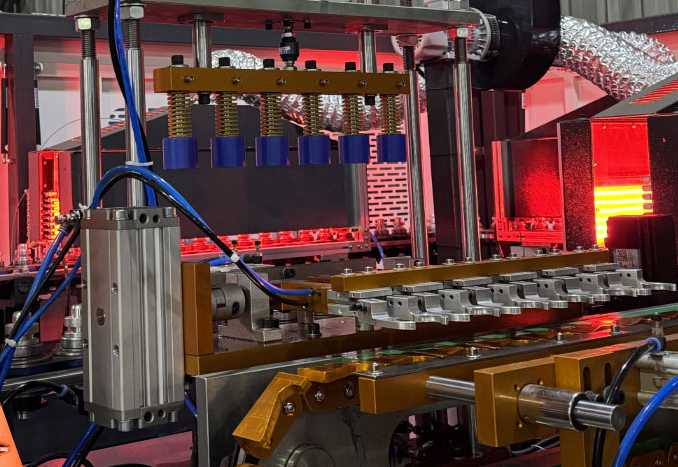
When it comes to replacing a Sidel Matrix lamp, “close enough” just doesn’t cut it. If the temperature curve is off, your whole run is off. That’s why we build our quartz elements to be true drop-in replacements. We make sure the power and light output mirror the originals exactly. The nitty-gritty of the match Here’s the thing: to keep your heating consistent, the wattage-to-length ratio has to be spot on. If the voltage drifts even a little, you’ll end up with hot spots or cold zones in your preforms. We obsess over the tungsten filament thickness and the winding pitch. Why? Because we want the heat flux to hit the same footprint as the OEM part. It means you can swap the lamps and keep your PID controllers exactly as they are. No need to spend hours rewriting code just to get the process stable again. What’s inside the glass We use high-purity quartz because PET blowing puts an incredible amount of stress on the glass. At these temperatures, one tiny impurity can cause the whole tube to pop. Depending on your specific setup, we use precise halogen fills to tweak the infrared emission. The goal is to get the heat to actually soak into the PET wall, rather than just scorching the surface. And we use standard industrial connectors. You just wire them up. No hacking into the machine’s harness or praying that a custom adapter works. Real-world talk Now, let’s be honest. These high-density lamps put out a ton of heat, but they’re fragile. Even the best element will burn out early if your oven’s airflow is a mess. If your cooling fans are clogged with dust, heat builds up around the ends of the lamp and kills it. While you’re swapping them out, do yourself a favor and wipe down your reflectors. It ensures the heat actually hits the preform instead of soaking back into the housing.