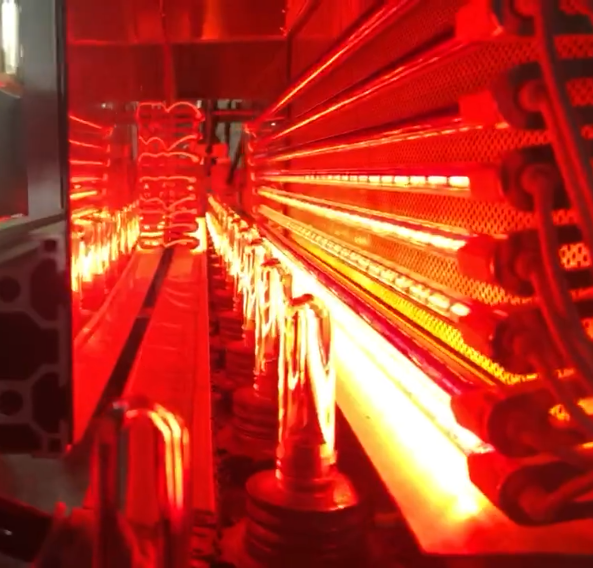
On the line, your blow molder lives and dies on repeatable preform heating. When the heating profile drifts, you don’t just see scrap—you see weak necks, blown seams, and the whole run coming off spec. We built our infrared heating to keep the machine where it needs to be: stable, fast, and under control. What actually matters under the hood The system is short-wave infrared, with emitters chosen to match the preform material and cycle time. Quartz tubes give you rapid response and tight control across the heating tunnel. Power delivery matches the OEM voltage and watt density so it lines up with the original design intent. It’s specced to drop in clean: standard R7s connectors, the right mounting dimensions, and tolerances that sit with the reflector geometry. No re-engineering the heating zone—just consistent output. Why this plays in stretch blow molding Stretch blow molding is fussy—temperature window is narrow. These emitters heat fast, so preforms spend less time in the tunnel and you can hold cycle time. The result: more bottles per hour, fewer rejects. Energy use comes down because the emitter only fires when it’s needed, and the reflector puts the heat where it counts. You also get fewer lamp swaps, which means less downtime and a maintenance schedule that stays predictable. What to watch on install and changeover Installation is straightforward, but reflector alignment matters. Set it wrong and you’ll see uneven heating across the preform row. And if you switch preform color or material, you’ll likely need to retune the power settings. We give you the calibration data to make that quick, but plan for a short ramp-up when the changeover hits.