
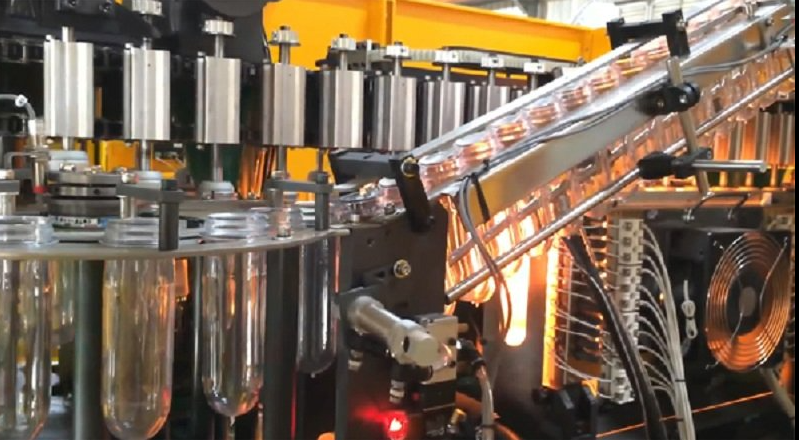
On the blow molding floor, a heating tunnel failure is the kind of downtime that stops the clock the worst way. Preforms that come up cold end up thin and weak. Run them too hot, and you’re throwing away material and cycle time. When that original halogen or quartz tube finally burns out, you need a replacement that hits the same temperature curve—quick—without paying the OEM premium.
What actually matters under the hood
We built the PETC preform infrared heating tube as a direct-fit, 2500W emitter for the heating tunnel on stretch blow molders. It puts out predictable short-wave infrared, focused on fast surface heating of PET preforms with tight control over the heating profile. The 2500W rating matches typical tunnel power density, so you keep the same warm-up time and thermal response as the original, without re-tuning the whole section. Quartz envelope construction and standardized connections—including common R7s-style interfaces—mean it drops into existing mounts and sockets with no modification.
Why this holds up where it counts
This tube is built to live in the same rough environment as your blow molder: high heat, constant cycling, and steady vibration. In practice, that translates to fewer temperature swings across the preform wall, so stretch is more consistent and bottle geometry stays truer. Infrared heats fast, which keeps the line moving—shorter ramp-up after startup, and fewer warm-up rejects after a brief stop. Because it meets OEM dimensional and electrical expectations, it’s a plug-and-play replacement that keeps the machine running without rework.
The practical details you can’t skip
Compatibility comes down to your exact machine model and socket layout—verify voltage, connector type, and mounting dimensions before ordering. Installation is straightforward, but the quartz envelope is brittle. Use clean gloves, align the connectors squarely, and don’t over-torque the holder. For the best performance, pair the tube with a properly calibrated reflector and keep the heating zone clean—no dust, no flaking material. That keeps heating uniform and stretches tube life, but it still needs routine maintenance, same as any OEM heating component.